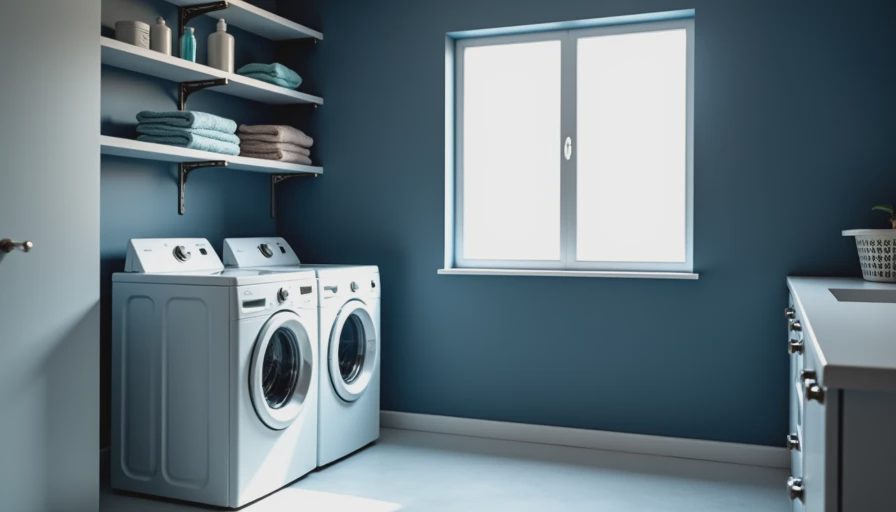
Most laundry-room advice starts with floating shelves, custom cabinetry, and a perfect paint color. That is not where real households start. Real households start with a washer, a dryer, a place for the water to go when something fails, and enough light to see what you’re doing at 9 p.m. on a school night.
After ten years of walking through the aftermath of laundry-room failures and six months of living with our own unfinished 1947 basement corner, I built a short list of what actually matters. Call it the minimum viable laundry room. Everything beyond this list is improvement. Everything short of it is a future claim file waiting to happen.
1. A Floor That Can Get Wet Without Ending the World
Concrete is fine if it pitches toward a working drain. Luxury vinyl or tile is better if you want to stand there without freezing your feet in January. Carpet, laminate that swells, or any floating floor with a paper core is a hard no.
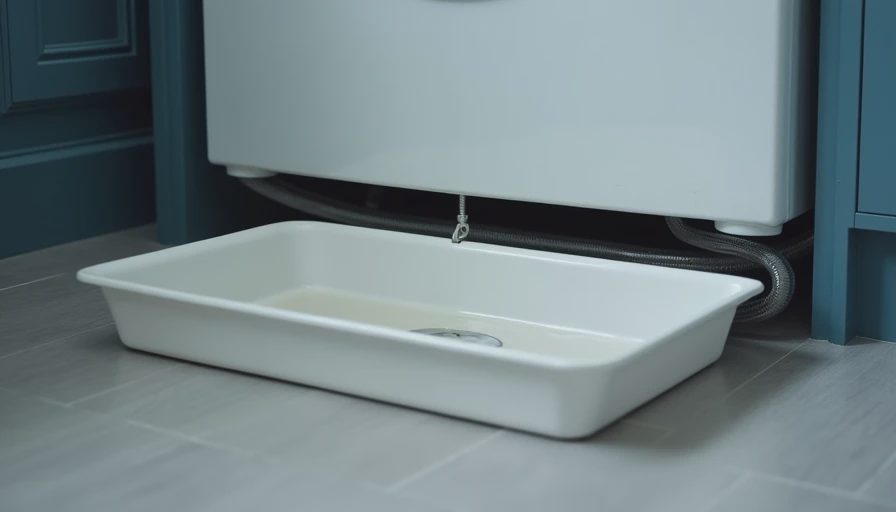
The floor does not need to be beautiful. It needs to survive a hose failure or an overflow long enough for you to notice and shut the water off. A simple drain pan under the washer that actually drains somewhere useful is the single highest-return addition most people skip.
2. Water Supply and Drainage That Won’t Betray You
Braided stainless-steel hoses. Period. Replace them every five years. Add a quarter-turn shut-off valve that is easy to reach. If the budget allows, add a water sensor with automatic shut-off.
The drain line needs a proper standpipe and P-trap, not a hose jammed into a laundry tub or a floor drain that sits higher than the machines. If your current setup relies on gravity and hope, fix that before you buy new machines.
3. A Dryer Vent That Actually Exhausts Outside
Short. Straight. Rigid or semi-rigid metal. Cleaned on a real schedule. No crushed foil ducts. No termination into the attic, the rim joist cavity, or the crawl space.
If the dryer takes more than one cycle to dry a normal load of towels, the vent is already telling you it is restricted. Listening to that message is cheaper than replacing joists after a lint fire.
4. Lighting You Can Work Under
One bare bulb is how you end up missing the slow drip behind the machine. Two or three bright, even sources—ceiling fixtures or a combination of ceiling and under-shelf lighting—change the entire experience. You notice problems earlier. You fold clothes without hunching. You stop hating the room quite so much.
Motion sensors or a simple timer switch are nice. They are not required. Working light is required.
5. Enough Horizontal Surface to Set Things Down
You do not need a full run of countertop. You need a stable place to set a basket, a bottle of detergent, and the shirt you just pulled out of the dryer that still has a stain. A simple plywood top on a pair of base cabinets, a wall-mounted fold-down shelf, or even a sturdy rolling cart will do the job.
Without that surface, everything ends up on top of the machines or on the floor. Both options accelerate wear and make the space feel more chaotic than it needs to be.
6. Basic Storage That Keeps Supplies Off the Floor
Wire shelves are acceptable. Closed cabinets are better if you have kids or pets who think detergent pods look like candy. The point is to get the bottles, boxes, and spare filters off the floor so you can see the floor and clean it.
You do not need a full pantry system. You need enough storage that the room does not immediately look cluttered the moment you finish a load.
What You Can Safely Skip at the Beginning
Matching front-load machines. Custom millwork. Wallpaper. A utility sink (useful, but not minimum). Built-in ironing boards. Chandelier lighting. Anything that prioritizes Instagram over the ability to contain water and exhaust lint.
Those upgrades can come later. The six items above cannot. They are the difference between a room that quietly protects the house and a room that generates the next insurance claim.
How We Applied the List to Our Own Space
In the 1947 basement we started with almost none of the six. We fixed the hoses and the vent first because those were the highest-probability failure points. We added temporary lighting and a drain pan while we planned the full renovation. The permanent floor, the real drain, the proper counter space, and the finished storage came during the larger project.
The order matters. Stop the water and the fire risks before you worry about how the room photographs.
If your current laundry setup is missing more than two items on this list, start there. You do not need a full gut renovation to make the room safer and less miserable. You need the minimum viable version that lets you do the work without dreading the space or gambling with the rest of the house.
A room you hate to be in is a room you’ll never take care of. Build the minimum version you will not hate, and the rest of the improvements become a lot easier to justify.