If you are about to renovate a laundry room, here is the conversation I wish someone had with every homeowner whose claim file later landed on my desk. This is not a design lecture. It is the practical filter I now use myself and the one I would hand to any friend before they sign a contract or order materials.
Start With the Failures, Not the Finishes
Most people begin with paint colors, cabinet styles, and tile inspiration. Those things matter eventually. They do not matter first. The first questions are the ones that determine whether the room will generate a claim in five or seven years:
Where does the water go if a hose fails or the machine overflows?
How short and clean is the dryer vent path?
Can you actually reach the shut-off valves without moving the machines?
Is the floor pitched toward a real drain or is it a flat surface that will hold water?
Answer those before you fall in love with a faucet or a wallpaper pattern. The pretty surfaces can be changed later. The hidden water and fire risks are much more expensive to fix after the walls are closed.

Budget for the Boring Parts First
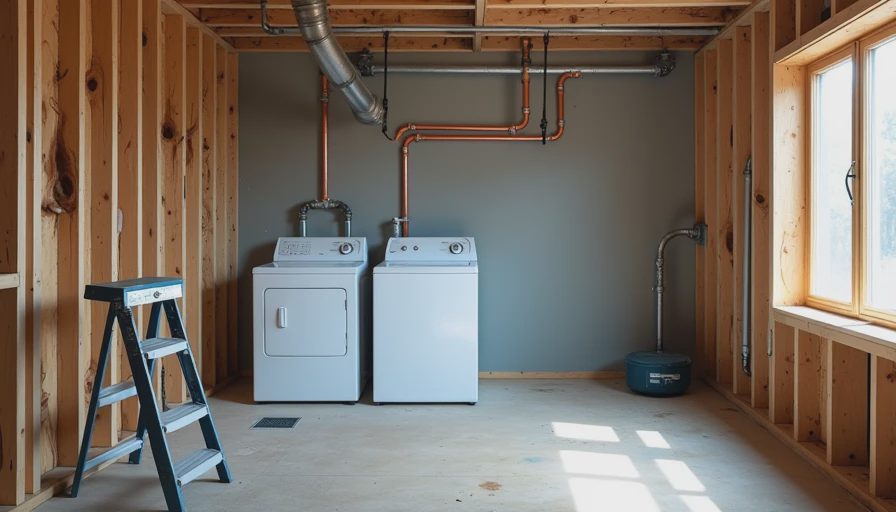
In our own project the money that went into framing off the foundation, proper insulation, a working floor drain, braided hoses, an automatic shut-off, rigid venting, and real lighting was the money I have never regretted. The money that went into the exact shade of paint and the style of the shelf brackets was secondary.
If the budget gets tight, cut the decorative layer, not the systems layer. A plain but dry and safe laundry room is a success. A beautiful laundry room that floods or catches fire is a claim.
Measure the Real Daily Workflow
Stand in the existing space and actually do a load of laundry. Notice where you set the detergent. Notice where the clean clothes go. Notice whether you can open the machine doors fully. Notice how far you have to carry wet items if there is no utility sink.
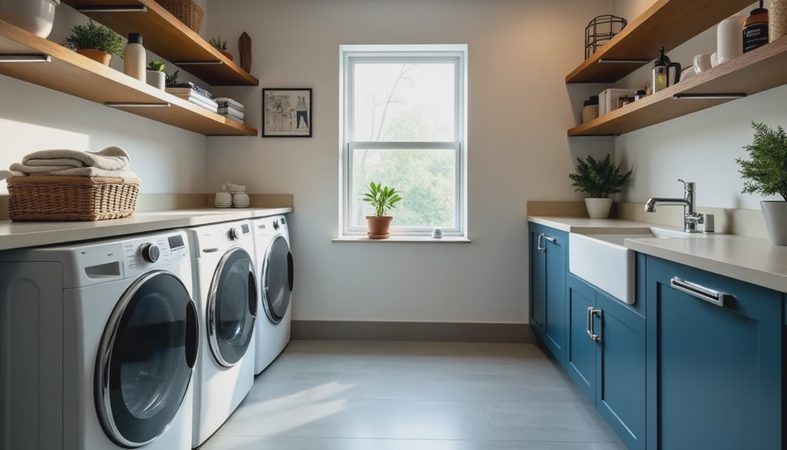
Design the new layout around those real movements, not around a floor plan that looks balanced on paper. Counter space next to or above the machines, a place for a basket, and a clear path to the sink or drain will improve daily life more than most cabinet upgrades.
Do Not Trust “It Meets Code” as the Final Answer
Code is the minimum legal standard. It is not a guarantee that the room will perform well in a cold basement, with real family use, over a decade. Moisture-resistant drywall, reachable shut-offs, short dryer vents, and floors that can handle water are often beyond the minimum and still worth doing.
I have opened up too many code-compliant laundry rooms that still failed from ordinary moisture and ordinary neglect. Aim higher than the floor set by the inspector.
Plan for Service Access
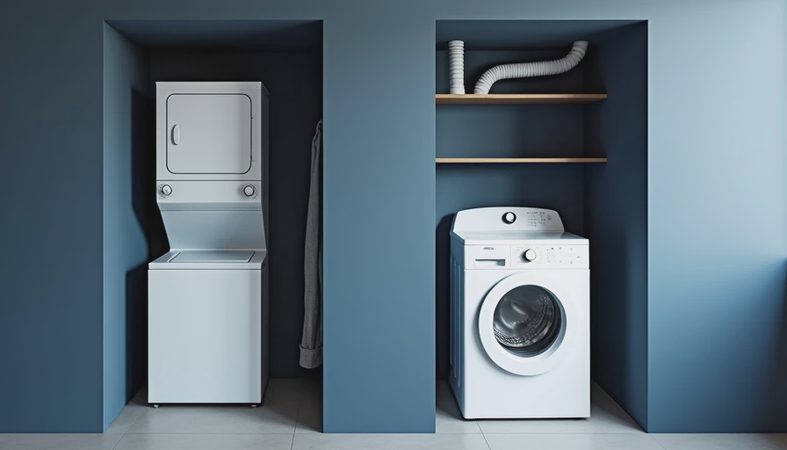
Whatever configuration you choose—side-by-side or stacked—make sure a future technician (or future you) can reach the hoses, the pump, the vent connection, and the shut-off valves without a full demolition. Beautiful built-ins that permanently hide the mechanical connections create expensive service calls and delayed repairs. Delayed repairs create larger failures.
Accept That the Room Will Still Be a Laundry Room
It will get wet. It will collect lint. It will see muddy gear, detergent spills, and the occasional overloaded basket. Choose surfaces and systems that tolerate that reality instead of materials that only look good on installation day. Hard-to-clean grout, delicate finishes, and overly complex storage systems age badly in this space.
The One Sentence I Would Write on the Contract
If I could add one line to every laundry renovation contract it would be this: “The room must be able to contain a hose failure or overflow for at least thirty minutes without damaging adjacent finished spaces, and the dryer vent must be cleanable from end to end without moving the machines.”
Everything else is negotiable. Those two requirements are not.
What Success Actually Looks Like
Success is not a magazine photo. Success is walking into the room two years later and finding that the hoses still look good, the vent is still clear, the floor is still solid, and you do not dread doing the work. Success is never having to call an adjuster because the laundry room failed in a predictable way.
I spent ten years documenting the predictable failures. I spent twelve weeks and $12,800 making sure our own room would not add to that list. The advice above is the shortest version of what that experience taught me.
A room you hate to be in is a room you’ll never take care of. Build the version you will not hate—safe, functional, and honest about how laundry actually works—and the care takes care of itself.