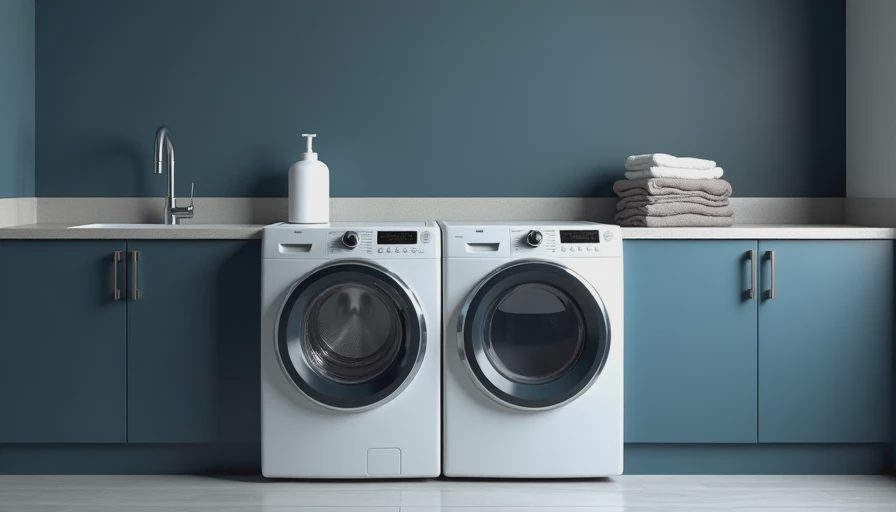
I used to think counter space in a laundry room was a luxury. Then we lived for six months with zero horizontal surface except the tops of the machines themselves. Detergent bottles lived on the dryer. Clean shirts got draped over the washer. Stain treatment happened on the floor or got carried upstairs. Everything took longer and felt more chaotic than it needed to.
When we finally added a continuous counter over the side-by-side machines, the daily experience changed more than I expected. It was not dramatic. It was simply that every step of the process had a place to happen. That alone made the room feel less like a chore and more like a workspace that actually worked.
What the Counter Actually Gets Used For
In our house the counter sees constant small jobs:
Pre-treating stains without carrying clothes to the kitchen
Setting down a full basket so you can load or unload with both hands
Measuring detergent and additives without balancing bottles on a curved machine top
Folding a few shirts while the next load spins
Parking clean clothes for thirty seconds while you deal with an interruption
None of those tasks are complicated. All of them become annoying when the only flat surface is also the lid of the machine you need to open.
How Much Space You Actually Need
You do not need a full kitchen-depth run. Twelve to fifteen inches of depth is enough for most laundry tasks. Twenty inches is luxurious. Even a narrow 10-inch shelf is better than nothing if that is all the depth you can spare.
Length matters more than depth. A continuous surface that spans both machines (or the full width of a stacked pair plus a bit of adjacent wall) gives you room to work without constantly rearranging. If you can only cover one machine, cover the washer—the one whose lid you open more often.
Simple Ways to Add It Without a Full Remodel
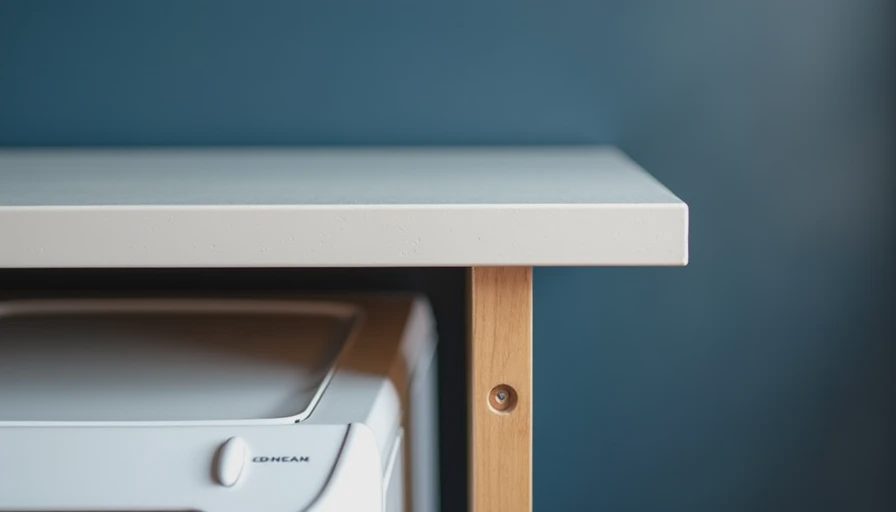
In a side-by-side setup the easiest approach is a simple plywood or laminate top set on short legs or on a pair of base cabinets that sit between or beside the machines. If the machines are the same height, a continuous top can rest on small cleats attached to the wall and a center support.
For stacked units a wall-mounted fold-down shelf or a narrow counter that runs beside the stack often works better than trying to cantilever over the dryer. Fold-down designs are especially useful in closet laundry where the door swing is tight.
We used a basic laminate countertop cut to length, supported by a wall ledger and two simple legs at the front. Total material cost stayed under $200. Installation took an afternoon. The surface is not precious. It can take a water spill and a dropped detergent bottle without drama.
Height and Clearance Details That Matter
Leave enough clearance above the washer lid so you can open it fully without hitting the underside of the counter. Most top-loaders need 16–18 inches of vertical space. Front-loaders are more forgiving, but you still want room to pull items out without scraping knuckles.
If you add cabinets above the counter, keep the bottom of those cabinets high enough that the counter remains usable. Eighteen to twenty inches of clear space between counter and upper storage is a comfortable minimum.
Make sure the counter does not block access to water shut-offs or the dryer vent connection. I have seen beautiful built-ins that made a simple hose replacement into a major disassembly project. Keep the mechanical connections reachable.
What Changed After We Added Ours
Evening loads stopped feeling like a logistical puzzle. Stain treatment happened immediately instead of being postponed. Clean clothes had a landing zone instead of ending up on the dryer or the floor. The room simply felt more competent.
That competence is the real return. A laundry room that supports the actual sequence of work is a room you are more likely to keep clean, more likely to notice small problems in, and less likely to dread. The counter is not decorative. It is functional infrastructure.
When to Skip It
If the machines are already jammed into a closet so tight that any counter would prevent the doors from closing or block the only path to the shut-off valves, skip it or use a fold-down design. Safety and access come first. A counter that creates new problems is not an improvement.
In every other case I have seen, even a modest surface pays for itself in daily friction reduction within the first month.
A room you hate to be in is a room you’ll never take care of. Giving that room a simple, durable place to set things down is one of the fastest ways to stop hating the work that happens there—and one of the cheapest ways to make the space feel finished.