Laundry room shelving is usually treated as a decorating decision. After a decade handling property claims, I see it differently. The shelves need to hold detergent, stain remover, towels, and sometimes a family-sized basket without blocking shutoff valves, trapping moisture, or collapsing onto a washer. A useful laundry room should look decent, but it also needs to survive a leaking hose, a humid dryer cycle, and the occasional overstuffed shelf.
When Rachel and I started fixing the basement laundry area in our 1947 Buffalo colonial, the first version was not pretty. There was a bare concrete wall, an outlet in an awkward spot, and enough dust to make every clean shirt questionable. We planned the storage around maintenance first. That decision made the room easier to use and easier to inspect, which matters when a small leak can stay hidden for weeks.
Start With the Machines and the Water Sources
Before buying laundry room shelving, map the room from the floor up. Measure the washer and dryer with their doors open, then mark the water supply valves, drain standpipe, electrical outlet, dryer vent, utility sink, and floor drain. Leave access to every service point. A shelf that looks efficient but forces you to remove three bins before reaching the shutoff valves is not efficient when water is spraying across the floor.
For side-by-side machines, shelves 12 to 16 inches deep usually provide enough room for detergent bottles without crowding the controls. Keep the lowest shelf several inches above the machines, especially if the washer sits in a basement where a failed hose could send water across the floor. For a stacked unit, vertical laundry room shelving can use the wall beside the machines, but do not place heavy containers directly above the control panel unless the mounting is exceptionally secure.
I also recommend leaving a visible gap around the dryer vent connection. Lint and heat need a clear path, and a shelf should never pinch flexible ductwork. If your vent runs through a wall, plan storage around the access area rather than covering it with a permanent cabinet.

Choose Materials That Tolerate Moisture
The cheapest particleboard shelving often performs badly in a laundry room. A small leak can swell its edges, loosen the fasteners, and turn a straight shelf into a sagging ramp. Melamine-coated panels are convenient and affordable, but seal exposed cut edges with matching edge banding or a moisture-resistant finish. A painted plywood shelf is tougher, particularly when the wall is in a basement with seasonal humidity.
Wire shelving has one major advantage: air can move around stored linens and the wall is easier to inspect. It also makes small bottles wobble unless you add shelf liners or shallow trays. Solid wood looks warm, but it needs a durable finish on every side, not just the visible top. I have seen unfinished shelf undersides darken from condensation while the top still looked perfectly clean.
For a budget project, a 12-inch laminated shelf, heavy-duty brackets, and plastic bins can often stay below $150 for a short wall. A custom cabinet run with doors, plywood boxes, and finished trim can reach $800 to $2,000, depending on labor and materials. Both approaches can work. The important distinction is whether the storage can be dried, inspected, and repaired after a spill.
Mount Laundry Room Shelving Into Something Solid
A shelf full of detergent is heavier than it looks. A standard 150-ounce bottle can weigh close to ten pounds, and several bottles plus towels and baskets add up quickly. Do not rely on drywall anchors alone for a long shelf. Locate studs with a stud finder, confirm their positions with a small test hole, and use screws long enough to enter the framing without hitting pipes or wiring.
If the studs do not line up with your preferred layout, install a painted plywood backer across multiple studs first. Then attach the shelf brackets to that backer. This spreads the load and gives you flexibility for bracket placement. Toggle bolts can help in some situations, but they are not a substitute for framing when storage will carry concentrated weight.
Keep brackets close enough together to prevent sagging. For a long shelf, three or more support points are usually better than two decorative brackets at the ends. Before loading it, apply firm downward pressure with your hands and check for movement. Shelving that shifts empty will become a problem once it carries jugs and baskets.
Build Storage Around Safer Daily Habits
Good laundry room shelving should make the safe choice the easy choice. Put the products you use every week between waist and shoulder height. Store backup detergent and bleach lower, but not directly on the floor where a small puddle can soak the containers. Use a lipped tray for stain removers and liquid products. A tray will not prevent every leak, but it can contain a loose cap long enough for someone to notice it.
Keep bleach separate from acids, ammonia-based cleaners, and other chemicals. Original labels should remain visible, and child-resistant closures are not a reason to store products within a young child’s reach. I prefer a closed cabinet for chemicals and open laundry room shelving for towels, folded rags, and empty baskets.
Do not use the top of the dryer as a permanent storage shelf. It collects lint, warms containers, and encourages people to pile clothing against the vent area. Give the dryer a clear breathing zone and keep combustible items, including cardboard packaging, away from the exhaust connection.
Make Small Laundry Rooms Work Harder
In a narrow closet, install one shelf above the machines only if the doors and controls remain easy to operate. A shelf depth of 10 to 12 inches can hold folded towels without making the room feel boxed in. Add a narrow rolling cart beside the washer for supplies, but leave enough clearance to pull the machines forward for service.
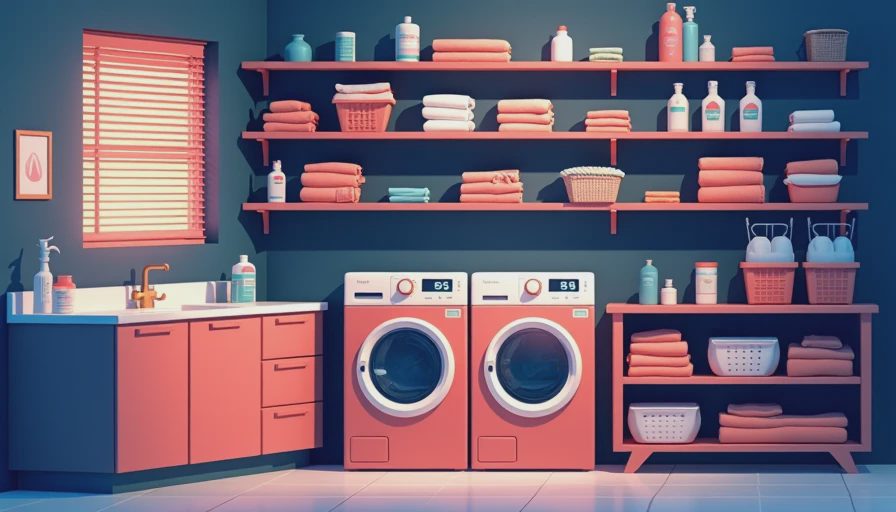
For a basement laundry room, consider a combination of open laundry room shelving and one tall cabinet. The open section keeps plumbing visible, while the cabinet hides seasonal supplies, extra hangers, and bulk paper products. Avoid storing cardboard directly against a concrete wall. Use plastic bins or leave an air gap so condensation does not create a mold problem behind the boxes.
A folding counter can sit above front-loading machines, but it should be removable or designed with access panels. Do not permanently seal the machines behind cabinetry without confirming how they will be disconnected and moved. Appliance repairs are already inconvenient; removing a fixed countertop makes them expensive.
The Claims-Adjuster Inspection Before You Finish
Before loading your new laundry room shelving, run through a simple inspection. Confirm that the washer hoses are braided stainless steel or another manufacturer-approved durable type, not old rubber hoses. Check that the drain hose is secured and that the dryer vent is connected, clean, and routed as directly as practical. Test the water shutoffs so you know they actually turn.
Look behind and beneath the machines with a flashlight. Feel for dampness around the supply connections and inspect the wall for staining. A low-cost water leak alarm near the washer is sensible, particularly in a basement or second-floor laundry area. It will not stop a flood, but an audible alert can turn an overnight disaster into a quick cleanup.
Then load the shelves gradually. Put heavy bottles over brackets or near supported areas, keep containers inside trays, and leave a little unused space. Overpacked storage hides leaks and makes every chore harder. A room you hate to be in is a room you’ll never take care of. The best laundry room shelving gives you clear floors, visible plumbing, and a place for everything without pretending water and heat are harmless.