The best laundry room ideas are not the prettiest ones first; they are the ones that keep water off the floor, heat out of the framing, and lint out of the duct. In Buffalo, I spent years walking into basements where a $20 hose turned into a four-figure mess, and the same pattern shows up in newer homes too. A room you hate to be in is a room you'll never take care of, so the goal is a space that is dry, bright, and easy to use on a Tuesday night when nobody wants to be there.
Start with the failures, not the finishes
Most laundry-room damage starts with one of three things: a supply hose, a drain problem, or a dryer that was vented badly from day one. The ugly part is that the damage usually spreads before anyone notices. A washer line can drip behind the machine for weeks, then the subfloor swells, the trim cups, and the first visible clue is a stain on the ceiling below. A dryer vent packed with lint does not just waste energy; it can overheat, scorch the duct, and in the worst cases light the surrounding dust and debris. If your room is in a basement, the risk is doubled because hidden leaks feed mold fast. I have seen more than one homeowner spend money on quartz counters before they spent money on stainless braided hoses, which is backwards in every way.
Build the layout around the machines
The best laundry room ideas start with working clearance, not cabinet catalogs. Side-by-side machines need enough room to open the doors fully, pull the washer forward for service, and still stand there with a laundry basket in your hands. If you are stacking units, make sure the controls are reachable without a step stool and that the floor can handle vibration without shaking the whole room. I like a counter above front-load machines because it gives you a place to sort, fold, and set down detergent without balancing everything on top of the dryer. If the room is tight, a pocket door or a door that swings out can be the difference between annoying and livable. Keep the path to the electrical panel, shutoff valves, and cleanout clear. When the service tech shows up, the room should help them do their job, not force them to drag appliances through a maze.
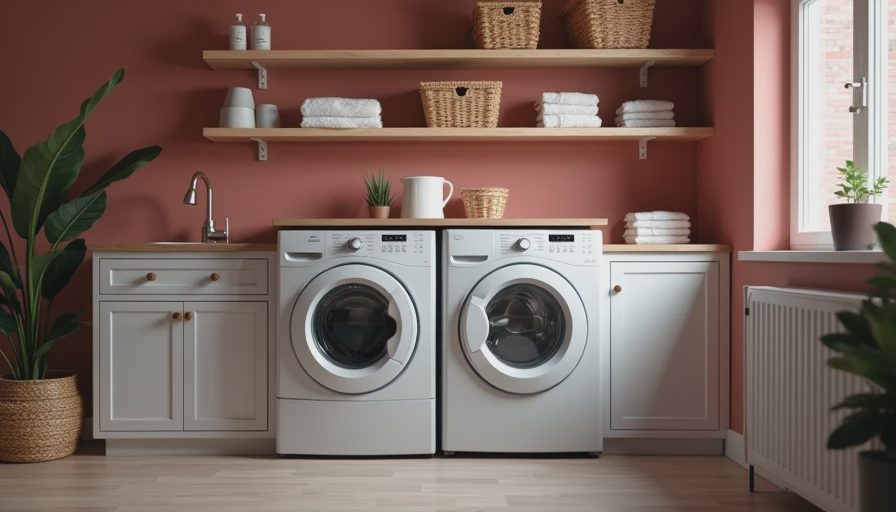
Make water the first design decision
If you only upgrade one thing, upgrade the parts that can flood the house. Braided stainless supply lines cost more than the cheap rubber ones, but they are the right call for a room that runs every week. Put the shutoff valves where you can reach them without moving the machines. If the machines sit upstairs or over finished space, a pan under the washer with a drain is cheap insurance. In basements, I also like a floor material that does not mind a mop and does not mind standing water for a few hours if something goes wrong. Porcelain tile, sealed concrete, and sheet vinyl are all better choices than carpet or raw plywood. If the room shares a wall with storage, keep cardboard boxes and holiday bins off the floor. One small leak can turn a storage corner into a mold farm in a hurry. This is where good planning saves real money, because the repair bill for hidden water is almost always bigger than the cost of prevention.
Ventilation, power, and heat are where claims grow
A lot of laundry room ideas look finished until the dryer starts running every day. That is where airflow, heat, and electrical load matter. A gas dryer needs proper venting and a safe gas connection; an electric dryer needs the right 240-volt circuit. Either way, use a rigid or semi-rigid metal vent, keep the run as short and straight as you can, and clean the lint trap every load. Lint is not decoration, and it is not harmless. It piles up in the duct, around the outlet, and inside the machine cabinet if the vent is neglected. If the room has a utility sink, put the outlet and switch locations where water cannot splash them. I also like LED ceiling lights with enough brightness to spot a small leak before it becomes a ceiling stain. Good light is cheap. Ceiling repairs are not. The claim file on a burnt dryer room usually starts with a bad vent, a dusty floor, and somebody who thought monthly cleaning was optional.

A small-space plan that still feels finished
These laundry room ideas work in a basement, a hallway closet, or a mudroom if you keep the design honest. If the room is tiny, go vertical with closed cabinets to hide detergent and cleaning supplies, then use one open shelf for the things you grab every week. A narrow folding counter, even if it is only 18 inches deep, beats carrying wet clothes to another part of the house. If you can fit a stacked washer and dryer, you may free enough space for a hanging rod or a pull-out hamper. That is how a cramped room starts feeling like part of the home instead of a mechanical closet. On budget, a simple refresh can land under $500 if you are painting, adding brighter lighting, and swapping hoses. A safer midrange update with valves, a pan, flooring, and basic storage often runs $2,000 to $6,000. Full remodels with plumbing or electrical changes climb much higher, and that is where the insurance guy in me says to spend once and spend right.
Three questions I ask before anyone calls it done
When I look at a laundry space, I ask whether I can shut off the water fast, whether the dryer can breathe, and whether a wet floor would be easy to clean. If any of those answers is weak, the room is not really finished yet. The best laundry room ideas solve those problems without making the room feel like a utility closet from 1988. You do not need a magazine spread. You need durable finishes, clear access, and a setup that makes the next load easier than the last one. If you are planning a remodel and want a second set of eyes, that is exactly the kind of project I like to review. In a room where leaks and lint can do real damage, a little planning beats a lot of regret.