When homeowners search for professional dryer vent cleaning near me, they are usually reacting to a dryer that takes two cycles to dry a load, a laundry room that feels unusually warm, or a vent warning light that will not go away. Those are not minor inconveniences. They can indicate restricted airflow, and restricted airflow makes a dryer run hotter and longer. In my years handling property claims, I saw enough lint-related fire damage to stop treating the dryer vent as an optional maintenance chore.
A clean vent helps the dryer exhaust heat and moisture outside instead of pushing both back into the laundry room. It can also reduce drying time, protect clothing from excessive heat, and lower the strain on the appliance. The job is often affordable compared with replacing a damaged dryer, repairing scorched framing, or cleaning smoke residue throughout a basement.
Signs Your Dryer Vent Needs Attention
The clearest warning is a drying cycle that has become noticeably longer. A normal load that once finished in 45 minutes may now need 75 minutes or more. Clothes may feel hot but still damp, especially heavy towels and jeans. The top or sides of the dryer can become uncomfortably hot, and the laundry room may feel humid after a cycle.
Look outside while the dryer runs. The exterior vent flap should open with a steady flow of warm air. If it barely moves, if lint collects around the opening, or if no air comes out at all, the duct could be blocked or disconnected. In winter, I also watch for unusual frost or moisture around an exterior termination. That can point to warm, damp exhaust escaping where it should not.
A burning smell deserves immediate attention. Stop the dryer, unplug it if safe, and do not run another load until the source is identified. Lint buildup is combustible, but a damaged belt, motor, wiring problem, or crushed duct can create similar symptoms. A vent cleaner handles airflow and lint; an appliance technician should inspect mechanical or electrical faults.

What Professional Dryer Vent Cleaning Near Me Should Include
A legitimate professional dryer vent cleaning near me search should lead to a company that explains the process before quoting a price. The technician should inspect the entire accessible run, including the connection behind the dryer, the duct path, and the exterior termination. A quick vacuum at the wall is not the same as cleaning the full system.
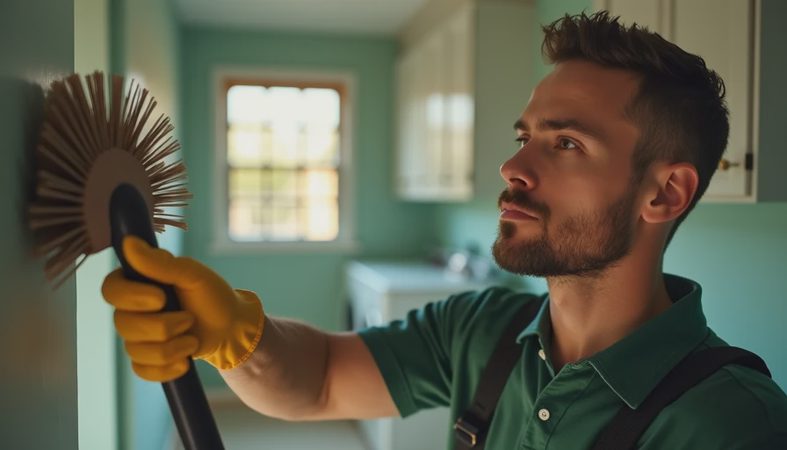
Many companies use a rotary brush system or high-powered air equipment designed for dryer ducts. The technician should protect the floor, move the appliance carefully, and collect loosened lint rather than blowing it into the room. Ask whether the price includes the transition duct behind the dryer, because that short section often gets crushed when the appliance is pushed too far back.
The best appointment ends with practical information. You should learn whether the duct is too long, has sharp bends, uses unsafe plastic or foil material, or terminates incorrectly. In most homes, a smooth, rigid metal duct provides better airflow than a flexible, ribbed interior. The final setup still needs to follow local building requirements and the dryer manufacturer's instructions.
How Much Does Dryer Vent Cleaning Cost?
For a straightforward vent run, homeowners commonly see prices in the range of about $100 to $200. A long run through a basement ceiling, second-floor wall, or crawl space can cost $200 to $400 or more because it takes additional equipment and labor. A company may charge extra for bird nests, heavy blockage, roof-level access, or a vent that needs repair rather than cleaning.
Be cautious with unusually cheap offers that appear on a flyer or social media advertisement. A $49 special may cover only a basic first section, with significant fees added after the technician arrives. Get the total price, service scope, and any access charges in writing. If the contractor recommends replacing a duct, ask for photographs showing the problem.
The cost is easier to judge when compared with the consequences of ignoring the issue. A damaged dryer can cost several hundred dollars to repair. Smoke cleanup after a small laundry-room fire can run into the thousands, while a larger fire involving walls, framing, or stored household items can become a major insurance claim. Cleaning is not a guarantee against fire, but it removes one preventable source of trouble.

Questions to Ask Before Booking a Technician
Before booking professional dryer vent cleaning near me, ask whether the company is insured and whether technicians are trained to work with residential dryer exhaust systems. Confirm that the service covers the full duct route, not just the lint screen housing. Ask what equipment will be used and whether the technician will test airflow after cleaning.
It is also smart to ask about access. If the dryer sits in a tight closet, the technician may need extra room to disconnect it safely. In a stacked laundry center, the process can be different from a standard side-by-side pair. A good provider will ask for photos or details instead of promising an exact price without understanding the layout.
Avoid anyone who suggests venting a dryer into a basement, garage, attic, or crawl space. Electric and gas dryers both need to exhaust outdoors. Indoor venting sends heat and moisture into the building, where it can contribute to condensation, mold growth, and damage to finishes. Gas dryer exhaust also raises serious indoor air-quality concerns.
What I Check After the Cleaning
After professional dryer vent cleaning near me is complete, run a medium load and pay attention to the difference. The exterior flap should open fully, airflow should feel strong, and the dryer should not make the room excessively hot. Clothes should dry in a reasonable cycle without the appliance repeatedly shutting down from overheating.
Look behind the dryer once it is back in position. The transition duct should not be sharply bent, crushed, or pulled loose from the wall connection. Leave enough space for the appliance to operate without forcing the duct into a tight accordion shape. Clean the lint screen before every load, and never operate the dryer while sleeping or away from home.
For most households, an annual inspection is sensible, especially when the dryer gets heavy use, the duct run is long, or the home has a basement laundry room. Homes with pets, frequent towel loads, or older venting may need attention sooner. If drying performance changes suddenly, do not wait for the calendar.
Make the Laundry Room Easier to Maintain
A room you hate to be in is a room you'll never take care of. Better lighting, a clear path to the shutoff valves, and enough space to pull the dryer forward can make maintenance much more likely. Keep cardboard boxes, paper goods, paint cans, and cleaning chemicals away from the appliance. Lint should go into a covered trash container, not accumulate behind the machines.
If your search for professional dryer vent cleaning near me is prompted by a renovation, plan the vent route before cabinets or shelving are installed. A shorter, straighter path usually performs better than a decorative enclosure with multiple bends. Leave an access panel where the duct needs inspection, and confirm that the exterior cap has a functioning flap and is protected from obvious debris.
The practical next step is simple: inspect the vent opening today, note how long your last load took, and request two or three detailed quotes. Choose the provider who explains the system clearly, documents the work, and treats airflow and fire prevention as seriously as the cleaning itself. A small maintenance appointment is far less disruptive than rebuilding a laundry room after a preventable claim.