If you are wondering who cleans dryer vents, the short answer is a professional dryer vent cleaning company, chimney sweep, or HVAC technician who specifically offers dryer exhaust service. This is not the same as emptying the lint screen. A technician cleans the full path from the back of your dryer through the wall and, in many homes, across the basement or attic before the vent exits outdoors.
I learned to take this job seriously during my years handling property claims. I have seen lint-packed ducts, crushed flexible hoses, disconnected joints, and exterior flaps sealed shut with winter debris. The dryer still ran, but heat and moisture had nowhere safe to go. That combination can damage the appliance, raise utility costs, create mold conditions, and increase fire risk. A room you hate to be in is a room you'll never take care of, and a neglected laundry room tends to hide problems.
Who should clean your dryer vent?
The best choice is a company that lists dryer vent cleaning as a core service rather than an afterthought. Search for dryer vent specialists, chimney companies, HVAC contractors, or appliance service businesses with dedicated vent-cleaning equipment. When comparing who cleans dryer vents, ask whether the technician will clean the entire exhaust line or only vacuum the opening behind the appliance.
A proper visit usually includes an inspection, disconnection of the dryer, cleaning with a high-powered vacuum or rotary brush system, and an airflow check. The technician should also examine the hose for kinks, confirm that the duct terminates outdoors, and look at the exterior vent cover. If the duct runs through a long basement ceiling or second-story wall, tell the company before booking. Long or hard-to-reach runs often require more time and specialized tools.
Avoid anyone who promises a five-minute cleaning with a household vacuum. Also be cautious of unusually cheap offers that turn into pressure sales for unrelated ductwork, insulation, or appliance replacements. A basic dryer vent visit commonly costs about $100 to $250, while a long, roof-level, or severely blocked run can cost more.
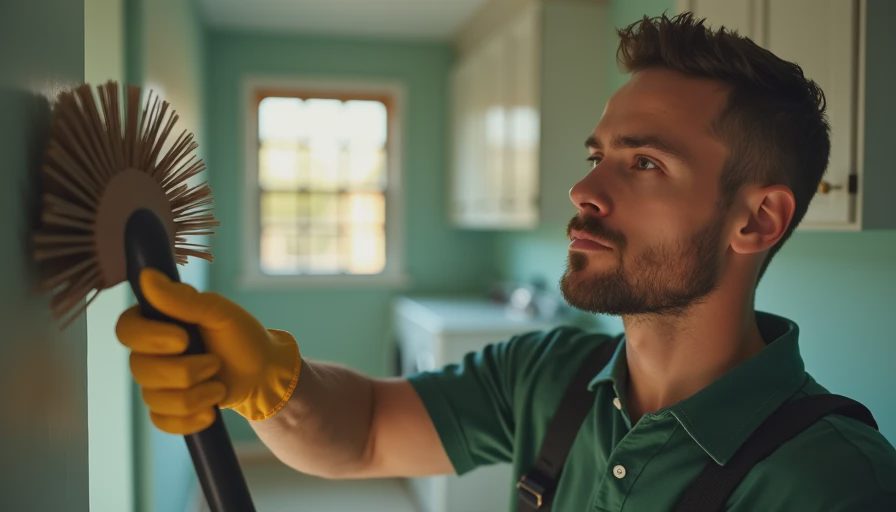
What a professional dryer vent cleaning includes
Before the appointment, clear a path to the dryer and remove clothing from nearby shelves. The technician should unplug the appliance, pull it away from the wall, and inspect the connection. If the existing transition hose is crushed or made from unsafe plastic, replacement with an approved metal transition duct is usually the sensible repair. I never recommend rubber washing machine hoses, and I apply the same practical caution to flimsy dryer connections.
Inside the duct, lint can form a dense felt-like layer, especially where the line bends or sags. A rotary brush loosens the buildup while a vacuum captures it instead of blowing it into the room. The technician may work from the dryer side, the exterior termination, or both. Once the line is clean, the system should move air strongly enough that the outside flap opens while the dryer runs.
Ask for a written summary if repairs are needed. Useful details include the approximate duct length, whether the vent exits through a wall or roof, any crushed sections, and whether the exterior cover needs replacement. Photos are helpful when a duct disappears behind finished walls.
Signs your dryer vent needs attention
Long drying times are the most obvious warning. A load that once dried in 45 minutes may need 90 minutes when lint restricts airflow. Other clues include clothes that feel unusually hot, a laundry room that becomes humid, a burning-lint smell, or an exterior flap that barely opens during a cycle.
The dryer itself can also offer evidence. If the cabinet feels excessively hot or the machine shuts off before clothing is dry, stop using it until the vent is inspected. Do not assume a new dryer will solve the issue. Modern appliances still need a clear exhaust path, and installing a larger machine can make a restricted duct problem more noticeable.
From an insurance perspective, documentation matters after a loss. A carrier will investigate the cause of a fire or moisture event, and poor maintenance can complicate the claim conversation. Insurance policies differ, so a clean vent is not a guarantee of coverage. It is simply a smart way to reduce a preventable hazard and show that you addressed ordinary upkeep.
DIY cleaning versus hiring a professional
Homeowners can safely handle some routine maintenance. Clean the lint screen after every load, vacuum the screen housing periodically, and inspect the visible hose for crushing. You can also check that the exterior flap is not blocked by leaves, snow, or a bird nest. Never operate the dryer without the lint screen installed.
The limits of DIY appear when the duct disappears into a wall, ceiling, crawl space, or attic. A basic brush kit may loosen lint without removing it, and pushing debris farther into a bend makes the problem worse. You also may not know whether the duct has disconnected inside a wall. That can release warm, damp air into framing rather than outdoors.
Call a professional if the run is longer than a short wall connection, the dryer overheats, drying times have changed, or the vent exits through the roof. Ask who cleans dryer vents in your area and whether the company carries liability insurance. You want someone prepared to identify a damaged duct, not simply someone willing to run a brush through it.

How often should a dryer vent be cleaned?
For many households, annual inspection and cleaning is a reasonable starting point. A family running several loads every day may need service more often, while a lightly used dryer in a short, straight vent run may go longer. Homes with long ducts, multiple bends, indoor pets, or exterior vents exposed to heavy snow deserve extra attention.
Put the date on your home maintenance calendar. In Buffalo, I prefer checking the exterior termination before winter and again in spring. Snow, ice, and windblown debris can obstruct the flap, and a basement laundry room may stay damp when ventilation is poor. If you recently bought a home, clean the vent before assuming the previous owner maintained it.
The service is small compared with replacing a dryer, repairing smoke damage, or opening a finished wall to correct moisture damage. The point is not to panic over every lint speck. It is to create a simple maintenance habit before a slow airflow problem becomes an emergency.
Questions to ask before booking
When calling, ask who cleans dryer vents, how the company reaches the entire duct, and whether the quoted price includes the exterior termination. Confirm that the technician uses professional vacuum or brush equipment and will tell you if the duct material or routing is unsafe.
Also ask whether the company has a minimum service charge, whether roof access costs extra, and whether you will receive before-and-after photos. A reputable technician should explain the findings without insisting that every homeowner needs expensive duct replacement. If the duct is buried behind drywall, get a clear explanation before authorizing invasive work.
After cleaning, run a normal load and check that the outside flap opens. Keep the lint screen clean, avoid overloading the drum, and investigate any return of burning odors or long dry times. Knowing who cleans dryer vents is useful, but knowing when to make the call is what protects the house.
A dryer vent is not glamorous home maintenance. Neither is replacing a washing machine hose or checking a basement shutoff valve. But these are the quiet tasks that keep a laundry room from becoming the starting point of a fire, flood, or mold claim. Schedule the inspection, ask direct questions, and make the safest repair before the next load goes in.