The best laundry room flooring is not the prettiest sample in the showroom. It is the surface that still protects your house after a washing machine hose lets go at 2 a.m. I spent 10 years handling property claims, and I have seen what happens when water runs under cheap laminate, swells particleboard, and sits unnoticed behind a stacked washer and dryer. A room you hate to be in is a room you'll never take care of, so the goal is a floor that is durable, cleanable, and pleasant enough to inspect regularly.
What a Laundry Room Floor Really Has to Handle
Laundry rooms are unusually hard on finishes. The washing machine creates vibration, the dryer adds heat, wet clothing creates humidity, and detergent gets tracked across the floor. A utility sink or floor drain adds another possible escape route for water. In a basement, the slab may also be cold and slightly damp, while an upstairs laundry closet has to protect the ceiling below.
That is why laundry room flooring should be evaluated in this order: water resistance, installation quality, traction, maintenance, and appearance. A floor that looks like white oak but buckles after one unnoticed leak is a bad bargain. Look for a material with few seams, a properly prepared subfloor, and a finished edge at walls and cabinets. If you are remodeling an upstairs room, an automatic shutoff device, a drain pan where appropriate, and accessible supply connections matter just as much as the surface under your feet.
The floor itself will not prevent a flood. It can, however, slow absorption, make a leak visible, and give you time to shut off the water before damage spreads into framing or the room below.
The Best Materials for Laundry Room Flooring
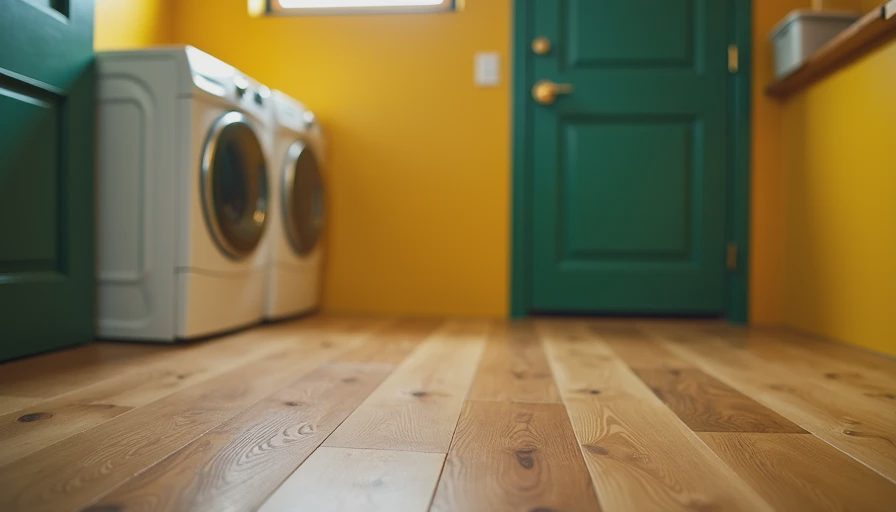
Luxury vinyl plank and luxury vinyl tile are popular for good reasons. Quality products are water resistant, easy to mop, and available in wood, stone, and concrete patterns. Rigid-core options can handle ordinary appliance traffic, but the subfloor must be flat. Low spots can create movement, open joints, or noisy flexing under a washer. Follow the manufacturer's instructions around perimeter gaps and transitions; do not assume a floating floor is automatically waterproof.
Porcelain tile is another strong choice, especially over a concrete basement slab. It does not absorb water the way many wood-based materials do, and it tolerates detergent, mud, and frequent cleaning. The weak point is the grout. Cracked grout or an unsealed change of plane can let water move below the tile. Large-format tile has fewer grout lines, but it demands a flatter substrate and more careful installation.
Sheet vinyl offers one of the most practical surfaces for a tight budget. Because it has fewer seams than planks or individual tiles, it can be forgiving during a small spill. Professional installation is valuable at doorways and around floor drains. Peel-and-stick tiles are inexpensive, but I would not use them as the primary defense in a room with an old washer, questionable plumbing, or a history of leaks.
Materials I Would Treat With Caution
Standard laminate is a poor first choice for laundry room flooring. Even products marketed as water resistant can suffer when water reaches the joints, edges, or underlayment. A slow leak behind the machine may not be discovered until the boards cup and the baseboard feels soft. Engineered wood can look excellent, but it still depends on sealed joints and fast cleanup. It belongs in a carefully managed space, not in a basement where moisture already causes concern.
Natural hardwood is beautiful but demanding. Repeated wet footprints, appliance vibration, and humidity changes can damage the finish over time. Carpet should be ruled out entirely in a typical laundry area because it holds moisture, absorbs odors, and makes leak detection harder. Rubber flooring can provide traction and comfort, but confirm that the product is intended for residential interiors and will not stain the subfloor or react with cleaning chemicals.
If the existing floor smells musty, do not cover it immediately. Use a moisture meter, inspect the walls and baseboards, and find the source first. New flooring over an active moisture problem is a cosmetic delay, not a repair.

Installation Details That Prevent Expensive Problems
Good laundry room flooring starts below the finish material. On concrete, check for cracks, damp spots, and uneven areas. A slab that feels dry today can still transmit moisture seasonally, particularly in a basement in Buffalo, Minneapolis, or another cold-weather market. Use the flooring manufacturer's approved moisture test or vapor-control method rather than guessing with a plastic sheet taped to the floor.
At walls, cabinets, and door thresholds, plan how water will be stopped or noticed. Baseboards should not be installed in a way that traps a hidden leak behind them. Seal appropriate penetrations without blocking required drainage or ventilation. Leave service access around shutoff valves and the washing machine box. If your laundry area has a floor drain, keep it clear and confirm that the surrounding slope sends water toward it.
Appliance placement matters too. A washer should be level so it does not walk during the spin cycle. Use braided stainless-steel supply hoses rather than old rubber hoses, and replace them when they show wear. A drain pan can help under a machine, but it is not a substitute for sound plumbing or an automatic shutoff. The dryer needs a clean, properly routed vent that exhausts outdoors; lint buildup is a fire concern, not just a housekeeping issue.
Choosing a Floor by Budget and Room Type
For a basement utility room, sheet vinyl over a prepared slab is often the practical value winner. Expect roughly $2 to $7 per square foot for material, with installation and subfloor repairs adding to the project. Luxury vinyl commonly falls around $3 to $8 per square foot for material, while porcelain tile can range from $3 to $12 before labor, underlayment, grout, and trim. Local labor can change those totals substantially.
For an upstairs laundry room, prioritize leak visibility, a transition that does not create a trip hazard, and protection for the ceiling below. Vinyl or tile is usually easier to monitor than a wood-based floor. In a compact closet, use a continuous surface if possible and avoid placing a permanent cabinet where it blocks the shutoff valves. In a large family laundry room, porcelain tile may earn its higher installation cost through long service life, while luxury vinyl is kinder to knees and easier to replace section by section.
A Claims-Adjuster's Final Checklist
Before ordering laundry room flooring, walk through this short inspection. Confirm that the washer hoses, drain connection, and supply box are accessible. Check whether the dryer vent is crushed, excessively long, or full of lint. Look for soft baseboards, darkened corners, peeling paint, and musty odors. Measure door clearances so a thicker tile assembly does not prevent the door from opening.
Ask how a spill will reach the floor drain, how quickly you will notice water behind the appliances, and whether the finish can be cleaned without leaving a slippery film. Photograph existing conditions before renovation, keep receipts for materials and plumbing work, and review your homeowners policy for water-damage limitations. Sudden accidental damage is often treated differently from gradual seepage or neglected maintenance, and policy language controls.
The smartest laundry room flooring choice is the one that matches your actual risk, not the staged room in a catalog. Pick a surface you can mop, inspect, and live with, then spend the remaining budget on hoses, shutoffs, ventilation, and a level installation. Those unglamorous details are what keep a small laundry problem from becoming a four-figure claim.