A laundry room folding table is one of those upgrades that sounds simple until you use one every week. The wrong surface swells near a utility sink, blocks the dryer door, or turns a narrow walkway into an obstacle course. The right setup gives you a dependable place to sort clothes, fold towels, treat stains, and keep clean laundry off the basement floor.
I have inspected enough water-damage claims to know that laundry rooms punish shortcuts. A burst supply hose can put several inches of water across a basement overnight, while a slow leak behind a cabinet can quietly damage flooring and framing. Your table will not prevent either problem, but its location and materials can make cleanup easier. In my own 1947 Buffalo colonial, I planned the folding surface around access to shutoffs, the drain, and the machines instead of squeezing in a pretty countertop first.
Choose the right table size before buying materials
Start with the actual room, not an online photograph. Measure the wall, then measure how far the washer and dryer doors swing open. Leave at least 30 inches of comfortable walking space wherever possible, and do not cover an electrical panel, gas shutoff, water valve, cleanout, or floor drain. A table that looks efficient on paper becomes a daily nuisance if you have to turn sideways to reach the detergent.
For most homes, a depth between 20 and 25 inches works well. A 48-inch-wide surface handles a normal basket and a stack of shirts; a 60-inch version gives two people room to work. In a closet laundry area, a 36-inch folding table can still be useful if it hinges against the wall when not needed. Measure the basket you actually own. A deep surface is wasted if the basket cannot pass through the doorway.
Height matters, too. Around 36 inches is comfortable for many adults, but a lower surface can suit children who help sort socks. If your washer and dryer are front-loading, matching the table height to the tops of the machines creates a continuous work zone. Avoid resting a countertop directly on vibrating appliances unless the product is designed for that purpose; the spin cycle can walk objects, loosen fasteners, and create irritating noise.
Materials that handle water, heat, and detergent
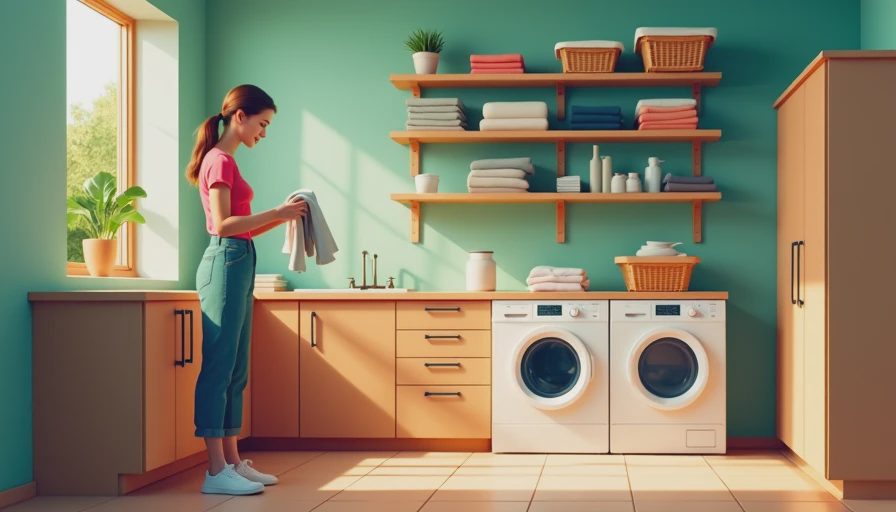
A laundry room folding table should tolerate damp hands, a leaking bottle, and the occasional hot dryer load. Sealed plywood with a durable laminate top is a practical budget choice. High-quality plastic laminate usually costs less than natural stone and is easy to wipe clean. Sealed hardwood can look excellent, but it needs regular attention at every edge, especially around a sink.
I am cautious about unsealed particleboard. It may be inexpensive, but one small plumbing leak can cause the core to swell permanently. That swelling can split laminate and create a rough edge that catches fabric. If you use a manufactured wood panel, seal cut edges with appropriate primer or finish before installation. Do not rely on a factory-finished top to protect a newly cut opening.
Quartz and solid-surface materials offer excellent water resistance, but they raise the budget and can be difficult to modify later. Expect a basic DIY surface to cost roughly $75 to $200, while a custom solid-surface installation can reach several hundred dollars before cabinets or hardware. The best choice is the one you can inspect, clean, and repair without treating the room like a showroom.
Round or eased front edges are worth considering. Sharp corners become painful in a tight basement, particularly when someone carries a full basket. Use corrosion-resistant screws and hardware if the room is humid. Ordinary steel fasteners can rust behind a cabinet or bracket, leaving stains and weakening the connection.
Wall-mounted, cabinet-supported, or freestanding?
A wall-mounted laundry room folding table is usually the best answer for a narrow space. Heavy-duty folding brackets attach to studs and let the surface lift when you need floor clearance. Do not anchor a loaded table only to drywall. Locate studs, use hardware rated for the expected weight, and test the folded position so it does not hit a door, light switch, or shelving.
A cabinet-supported table provides stronger everyday storage. You can keep stain remover, mesh bags, and spare dryer sheets below the surface, while the countertop hides the machines or fills the gap beside them. Leave a removable access panel near plumbing connections. I have seen homeowners build beautiful fixed cabinets and then discover that a technician cannot reach the shutoff without dismantling half the room.
A freestanding table makes sense for renters or homeowners who want flexibility. Choose one with locking casters, a stable base, and a top that will not tip when a basket is pulled toward you. Keep it away from the dryer vent connection, and never store cardboard, towels, or cleaning products directly against a hot appliance. Mobility is useful only when it does not create a fire or trip hazard.

Build safety into the folding station
The table should support safe maintenance, not hide problems. Keep the washing machine hoses visible enough to inspect. Replace rubber hoses with braided stainless-steel lines, and avoid sharply bending them behind the appliance. Check the connections for moisture every few months, especially after moving a machine. A leak alarm on the floor near the washer is an inexpensive addition that can provide early warning.
Maintain the dryer's exhaust path. The vent should connect securely, use appropriate materials, and discharge outdoors where required by the installation. Clean the lint screen every load and remove accumulated lint from the duct periodically. A table, shelf, or storage bin should never press against the vent hose or restrict airflow. Heat and lint are a bad combination in any enclosed laundry area.
If the room has a floor drain, do not block it with a table leg or storage bin. In a basement, keep important documents, electronics, and irreplaceable items on shelving above the floor. A folding surface is convenient, but it should not become a landing spot for boxes that absorb water before anyone notices the problem.
A practical setup for different budgets
For under $150, mount a sealed laminate panel to two folding brackets, add a small wall rail for baskets, and place a leak detector beside the washer. This gives a compact folding zone without sacrificing access to the machines. Spend the remaining money on braided hoses and a replacement dryer vent connection if the existing one is questionable.
Between $250 and $600, consider a cabinet-supported top with a removable rear panel, adjustable shelf, and one drawer for stain supplies. Add a slim hanging rod above the table for shirts that should not go in the dryer. Choose closed storage for chemicals, particularly if children or pets can enter the room.
For a larger renovation, a continuous counter can run beside front-load machines while a separate hinged section serves as the laundry room folding table. Keep the work area near task lighting and away from the furnace or water heater. If you are changing plumbing, electrical circuits, ventilation, or gas lines, bring in the appropriate licensed professional and follow local requirements.
The inspection checklist I use at home
Before calling the project finished, stand in the doorway with a loaded basket. Can you reach the washer controls, dryer lint screen, shutoffs, and electrical outlet? Can the appliance doors open fully? Is the surface level? Does the wall bracket move or flex? Are cut edges sealed? Is the floor drain visible? Can you clean behind and beneath the table?
Then run a real test. Wash a load, transfer it to the dryer, open the door, and fold a basket of towels. Listen for vibration and check whether the table blocks airflow or bumps your hip. Wipe the surface with the cleaner you normally use. If the finish dulls, lifts, or feels sticky, fix that before the room sees daily abuse.
A room you hate to be in is a room you'll never take care of. A well-planned laundry room folding table will not make every load enjoyable, but it can make the work faster and the room easier to inspect. Build around access, moisture resistance, and fire prevention first. Then add the baskets, paint color, and decorative touches that make the space feel like yours.