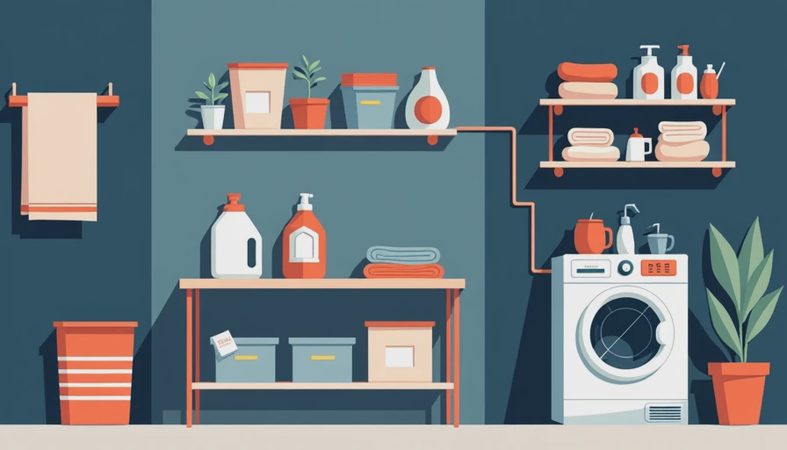
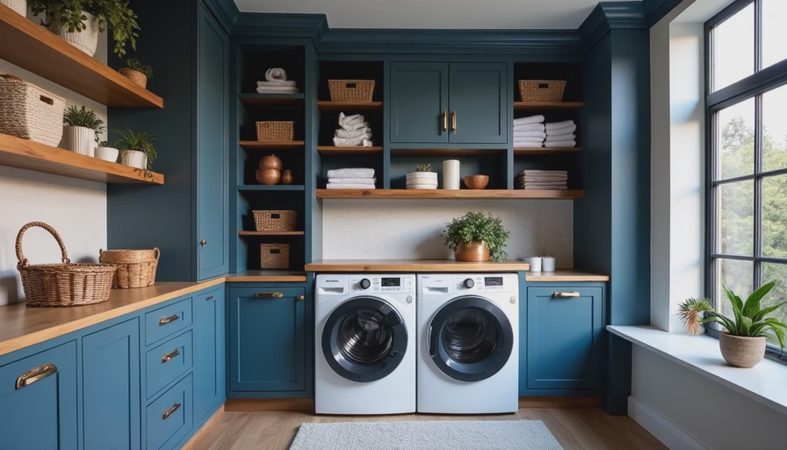
Laundry room wall cabinets are usually sold as a storage upgrade, but I look at them differently. After inspecting thousands of property claims, I know the cabinet itself is rarely the expensive part of a laundry-room disaster. The expensive part is what happens when a cabinet blocks a shutoff valve, traps moisture against a wall, or encourages someone to store combustible junk beside a dryer. Good storage should make the room easier to use and safer to maintain.
In our 1947 Buffalo colonial, the laundry area started as two appliances in an unfinished basement corner. Detergent sat on the floor, clean towels collected on top of the dryer, and the washer shutoff was hidden behind a basket. That arrangement was not charming. It was an invitation to delay a small repair until it became a wet ceiling downstairs.
Choose Cabinets Around the Hazards
Before measuring for laundry room wall cabinets, locate the water supply valves, drain standpipe, electrical panel, gas shutoff if you have a gas dryer, and dryer vent connection. Storage should not prevent quick access to any of them. A cabinet mounted directly over a washer can work well, but leave enough clearance for the lid, control panel, hoses, and routine maintenance.
For most homes, 12- to 15-inch-deep cabinets provide useful storage without making the room feel boxed in. A 30- to 36-inch-wide unit above each appliance holds detergent, stain remover, and spare dryer sheets. If the room is narrow, shallow upper cabinets are often better than deep boxes that force you to turn sideways between the machines and opposite wall.
Mounting height matters. Keep the lowest shelf comfortable for the shortest person doing laundry, but do not install a cabinet so low that it crowds the washer lid or blocks a front-load door. Use a level ledger during installation and fasten the cabinet into studs, not just drywall anchors. A loaded cabinet can easily weigh more than 100 pounds once bottles, towels, and cleaning tools go inside.

Materials That Survive a Damp Room
Laundry room wall cabinets should tolerate humidity, splashes, and the occasional detergent leak. Painted plywood boxes, thermofoil, and well-sealed medium-density fiberboard can all work, but exposed particleboard edges are a weak point. One overflowing utility sink or slow hose leak can swell an unprotected cabinet base long before anyone notices.
Look closely at the underside, back panel, and edge banding. Seal cut edges around plumbing openings with a compatible primer or polyurethane. If you are ordering ready-to-assemble cabinets from IKEA, Home Depot, Lowe's, or a local cabinet shop, ask how the box material handles moisture rather than choosing solely by door style. A $300 cabinet that fails after one leak is not a bargain.
I prefer adjustable shelves with a washable surface and doors that close firmly. Open shelving looks convenient, but it exposes supplies to lint and makes a small room look cluttered quickly. If you do use open shelves, reserve them for folded towels and keep bleach, pods, and stain chemicals in a latched cabinet out of reach of children.
Do not store paper towels, cardboard boxes, or spare fabric directly beside a dryer exhaust. Lint fires are uncommon compared with water losses, but the heat source deserves clear space. Clean the lint screen every load, keep the vent duct short and properly connected, and avoid turning the cabinet above the dryer into a pile of clothing.
Storage Layouts for Real Laundry Rooms
A straight wall with side-by-side machines can take one continuous run of laundry room wall cabinets. Use a narrow cabinet for an ironing board, a wider unit for supplies, and a dedicated shelf for clean linens. Labeling shelves sounds fussy until a household has three types of detergent and nobody knows which bottle is safe for the baby clothes.
For a stacked washer and dryer, wall storage should stay beside the tower or above it only if the manufacturer’s clearances allow it. Do not use the top of a stacked unit as a permanent shelf. Vibrations can walk bottles forward, and a falling container can damage controls or spill onto an electrical connection.
A utility sink changes the plan. Put frequently used stain-treatment supplies near the sink, but keep electrical cords and power strips away from its splash zone. Cabinets beside the sink need sealed seams and a removable toe-kick so you can inspect for a slow drain leak. A small access panel is less attractive than hidden plumbing, but it is much cheaper than demolishing cabinetry during a claim.

Installation Details That Prevent Expensive Repairs
Use a stud finder, but confirm the location with a small test hole before drilling a row of screws. Older homes often have uneven walls, patched drywall, or masonry behind the finish. In a basement, concrete block may require a different fastening method than wood framing. If the cabinet is near a furnace, water heater, or gas appliance, preserve required service clearances and do not improvise a shelf that blocks combustion air.
When cabinets sit above a washer, leave the hose connections visible enough to inspect. Stainless-steel braided hoses are a better choice than old rubber hoses, which can split without much warning. Replace supply hoses according to the manufacturer’s guidance, and consider an automatic water shutoff device if the laundry room is above finished living space or rarely occupied.
After installation, run the washer through a full cycle while checking the valves, drain, and cabinet underside. Put a dry paper towel beneath connections for the first few loads; it reveals a small drip faster than a dark basement floor does. I also recommend a moisture alarm near the washer, especially for second-floor laundry rooms.
What to Budget and When to Call a Pro
Stock laundry room wall cabinets commonly cost about $150 to $500 each, while semi-custom units can run $700 or more before installation. Add roughly $200 to $600 for professional mounting, depending on wall conditions, cabinet count, and whether old storage must be removed. A simple paint refresh and new hardware can make affordable cabinets look intentional without turning the project into a full remodel.
Call an electrician if the layout affects outlets, dedicated appliance circuits, or a nearby panel. Call a plumber for relocated valves, a new sink, or a drain change. Cabinet installation is a reasonable DIY project when the walls are sound and the cabinets are modest, but lifting a long run alone is how expensive mistakes begin. A helper, ledger board, and ten extra minutes measuring are cheaper than a cracked cabinet or damaged appliance.
A Practical Final Inspection
Before loading laundry room wall cabinets, open every door and confirm that it does not strike the washer lid, dryer door, light switch, or shutoff handle. Check that shelves can hold the intended weight, screws are tight, and no sharp fastener ends project inside the box. Look behind the machines with a flashlight and make sure the dryer duct is not crushed.
Then create a maintenance routine. Once a month, inspect hoses, the drain connection, cabinet seams, and the floor beneath the appliances. Twice a year, pull out lint from the dryer area and test moisture alarms. Keep a small tray for detergent bottles so a leak is contained instead of spreading across the shelf.
The best laundry room wall cabinets do more than hide clutter. They keep supplies off the floor, preserve access to shutoffs, and make defects easier to spot. A room you hate to be in is a room you'll never take care of. Build storage that makes the room simple to inspect, and laundry day becomes less of a chore and less likely to become a claim.