Laundry room organization is not just about matching baskets to your cabinets. After inspecting more than 3,000 property claims, I can tell you that the most expensive laundry problems usually start with something boring: a split hose, blocked dryer vent, overloaded outlet, or slow leak hidden behind a pile of detergent. A better room should be easier to use and harder to damage.
My own laundry room was a dark corner in the unfinished basement of our 1947 Buffalo colonial. It had one bare bulb, a washer wedged against the wall, and enough mystery dust to qualify as a second floor. Rachel and I could have made it prettier first. Instead, we made it accessible, dry, and serviceable. That order matters.
Start with the failures I see in claims
The first rule of laundry room organization is to leave the important equipment visible. Do not bury shutoff valves, electrical panels, cleanouts, or the back of the machines behind permanent shelving. You need enough clearance to reach a valve quickly and pull a machine forward for inspection. A few extra inches can save hours during a leak.
Replace old rubber washing machine hoses with braided stainless-steel hoses. Rubber deteriorates, especially in warm, damp utility rooms, and a burst supply line can release gallons of water while everyone is asleep. Hand-tighten the connections, avoid sharp bends, and inspect them twice a year. An automatic water shutoff device with a moisture sensor is another sensible upgrade, often costing roughly $100 to $300 before installation.
Keep the floor beneath and around the washer clear. A shallow drain pan can help contain a small leak, but it is not a substitute for correct plumbing or a floor drain. In a basement, a raised platform can improve access and protect the machine from minor seepage, provided it is sturdy and does not block the drain or service connections.

Build storage around the work, not the photograph
Good laundry room organization follows the path clothing takes. Put a hamper or sorting station near the entry, a folding surface beside the dryer, and everyday detergent within easy reach. Store stain remover, mesh bags, and drying racks together rather than scattering them across three rooms. A 12-inch-deep wall cabinet can hold a surprising amount without making a narrow room feel boxed in.
Use closed storage for powdered products and cleaning chemicals, particularly if children or pets can enter the room. A simple latch is inexpensive protection. Avoid stacking heavy bottles on top of the washer, where vibration can send them onto the floor. Clear bins with labels work well for small spaces, while a pullout shelf can turn an awkward gap beside the machines into useful storage.
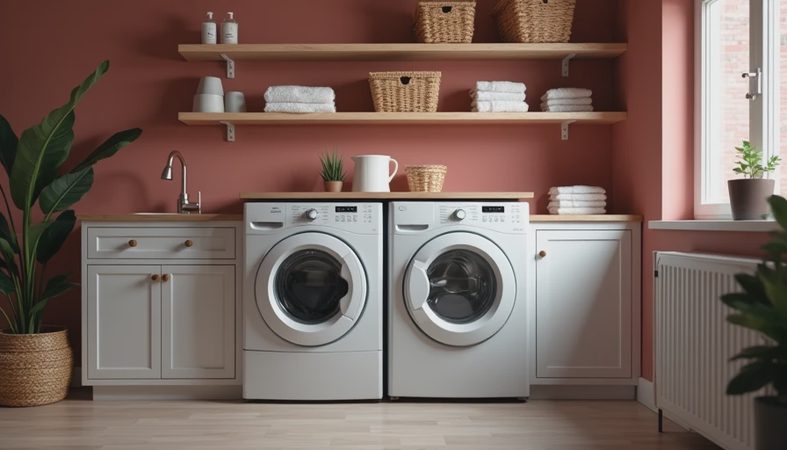
For a closet laundry area, use vertical space. Two sturdy shelves above the machines can hold detergent and linens, while a slim rolling cart can fit between the washer and wall. Leave the manufacturer's recommended clearance around stacked units, and do not install a shelf where it prevents the dryer door from opening fully. Laundry room organization should reduce reaching, bending, and frantic searching, not create new obstacles.
Treat the dryer like a heat-producing appliance
Lint is not harmless fluff. It is dry, combustible material, and a restricted vent makes the dryer work harder and run hotter. Clean the lint screen after every load. Vacuum behind the dryer and around the lint housing periodically. If clothes take much longer to dry than they used to, the vent may be restricted, crushed, or disconnected.
Use a rigid or properly supported semi-rigid metal duct where allowed by local requirements; avoid thin plastic or foil accordion ducts that collect lint and can collapse. The exterior vent cover should open during operation and remain free of nests, snow, and debris. Never run a dryer while leaving home or going to bed, and do not dry items marked only for air drying.
Place a smoke alarm near the laundry area, following local placement rules, but do not put it directly in a dusty or steamy spot where nuisance alarms encourage removal. A carbon monoxide alarm is also important when fuel-burning equipment is nearby. These small details belong in any serious laundry room organization plan.

Control moisture before it becomes mold
Basement laundry rooms need a moisture plan. Keep a small gap between stored items and exterior walls so air can circulate. Do not let wet towels sit for days in a closed hamper. If the room smells earthy, use a moisture meter on the lower wall, around the utility sink, and behind the washer. A reading alone does not diagnose a problem, but a sudden difference between one area and the rest of the room deserves attention.
A dehumidifier can help maintain a comfortable relative humidity range, but it needs maintenance. Clean the filter, connect a secure drain line if using continuous drainage, and keep the unit away from standing water. Vent a utility sink area appropriately, and repair dripping faucets promptly. Mold remediation can cost hundreds or several thousand dollars depending on the material affected, while a loose hose clamp might cost only minutes and a replacement part.
Use moisture-resistant paint and flooring where practical, but do not treat waterproof-looking finishes as permission to ignore leaks. Vinyl sheet flooring, sealed concrete, and properly installed tile are often easier to clean than absorbent carpet. The safest design is the one that lets you notice a problem early.
A practical weekend reset
For a low-cost laundry room organization project, start by removing everything from the floor and photographing the plumbing connections. Check both hose ends, the drain hose, the dryer duct, and the outlet. Replace questionable hoses rather than waiting for visible damage. Then measure the room, including door swing, machine depth, and the location of shutoffs.
Next, create three zones: dirty laundry, washing supplies, and clean laundry. Give each zone one container or surface. Add a small shelf, wall hooks, or a narrow cart only after measuring clearances. Label the containers that contain chemicals, and move anything flammable away from the dryer and electrical equipment.
Finally, write the date of your inspection on a piece of tape inside the cabinet or near the machines. Every six months, repeat the hose check, vacuum lint, test alarms, clean the dehumidifier, and look for staining. A recurring reminder is more reliable than good intentions.
Make the room pleasant enough to maintain
Safety does not require a basement to look like a mechanical room. Better lighting, a washable runner placed away from the machine vents, and a folding counter can make the space less miserable. Choose light-colored walls if you want to spot drips sooner, and use hooks for the items that otherwise land on the floor.
The best laundry room organization is quiet, visible, and forgiving. It gives every bottle a home without hiding the shutoff valve. It keeps lint under control without requiring a complicated gadget. It leaves enough room to inspect the appliances because inspection is what prevents small defects from becoming insurance claims.
A room you hate to be in is a room you'll never take care of. Make it bright, reachable, and simple enough that the next inspection takes ten minutes. That is a better investment than another decorative sign, and it can spare you the phone call nobody wants to make at 2 AM.