Dryer vent cleaning is one of those boring chores that saves real money. It also saves time, because a dryer that can breathe finishes a load faster, uses less power, and is a lot less likely to overheat. In the claim files I used to review, a dirty vent was rarely the headline problem at first. It started as a warm laundry room, a long dry cycle, and a homeowner who kept telling themselves they would get to it next month. A room you hate to be in is a room you'll never take care of.
Why the filter is not the whole story
A clean lint trap is good housekeeping, but it is not the same thing as the vent path behind the machine. Lint still gets past the screen, and when it does, it settles in the duct, the elbow, and the outdoor hood where airflow slows down. That is where heat builds. If the dryer has to push against a packed line, the drum runs hotter, clothes take longer, and the machine works harder every load.
I have seen laundry rooms where the machine itself was fine, but the vent was so full of lint that the outside flap barely moved. That kind of restriction can raise energy use, shorten the life of the dryer, and create the kind of dry, hot conditions that make lint dangerous. If your towel load needs two cycles or the back of the dryer feels unusually hot, that is not a quirk. It is a warning.
What dryer vent cleaning actually includes
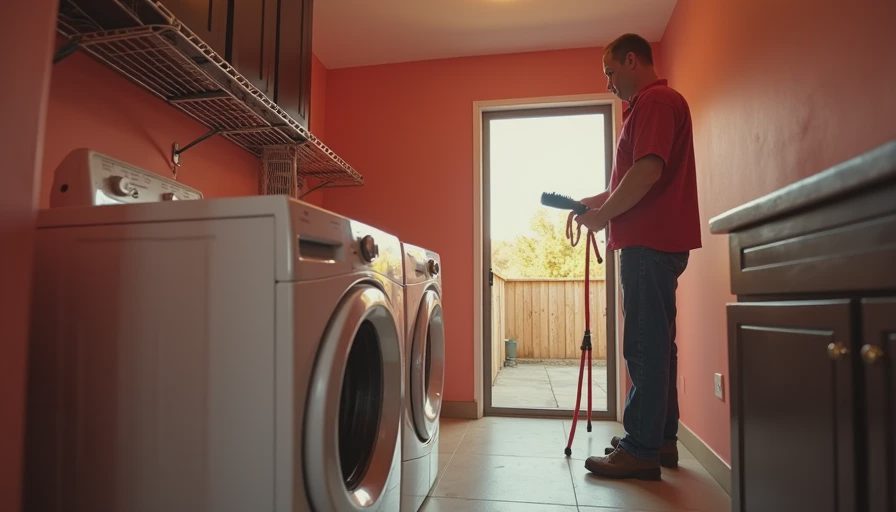
Dryer vent cleaning starts at the machine, not at the wall cap. First, pull the dryer forward, unplug it, and shut off the gas if it is a gas model. Then disconnect the transition duct and clean the cabinet opening, the flex connector, and the lint that collects around the blower housing. After that, the vent line itself gets brushed or vacuumed from one end to the other, and the outside termination gets checked so the flap opens freely.
This is also the moment to look at the duct material. I do not like plastic or flimsy foil behind a dryer. Rigid metal or semi-rigid metal is the safer choice because it holds its shape and does not sag into lint-catching traps. A basic DIY setup can be a shop vacuum, a screwdriver, and a vent brush kit like the Gardus LintEater or a similar product. On a short, straight run, that is often enough to make a real difference.
The key is not just removing some lint. The goal is restoring airflow all the way to the outside wall or roof cap. When that pathway is open, the dryer stops fighting itself. You usually notice it the next time you do a normal mixed load instead of a tiny test batch. Towels dry more evenly, the machine shuts off sooner, and the room does not feel like a steam box.
Signs the vent is overdue
If you want a simple field test, watch the dryer cycle, not the lint screen. A load that used to finish in one cycle but now drags into a second one is telling you something. So is a dryer that feels hot on the outside, a laundry room that smells dusty or scorched, or a vent hood outside that barely opens when the machine is running. Those are the kinds of details I used to write down during inspections because they usually pointed to a bigger airflow problem.
The other clue is location. Long vent runs, crushed ducts behind tight laundry closets, and roof terminations all collect more lint and are harder to service. In homes like that, I have seen simple cleanings prevent repairs that would have cost far more than the maintenance itself. A professional job usually runs about $100 to $250, and more complicated runs can land closer to $300 or $400. That is still a cheap fix compared with a service call, a new heating element, or smoke damage that spreads into the laundry room and hallway.
What to do when the run is hard to reach
There is a point where dryer vent cleaning stops being a quick Saturday project and turns into a hassle. If the vent exits through the roof, snakes through finished walls, or has not been touched in years, I lean toward hiring a pro. The same goes for gas dryers if you are not comfortable moving and reconnecting the appliance safely. A good technician should clean the full run, inspect the outside cap, and tell you if the vent is crushed, disconnected, or simply too long for the dryer to handle well.

I also tell homeowners to treat the cleanup as a chance to fix the weak spots, not just clear the lint. If the transition hose is too long, replace it. If the outside flap is stuck, replace it. If the duct is full of screw holes, tape and patch it properly or swap the section. Once the airflow is restored, the dryer does less work and the laundry room is easier to live with. That matters in a basement corner where moisture and heat already have enough chances to cause trouble.
A maintenance schedule that fits real life
You do not need to obsess over this every week. For most homes, dryer vent cleaning once a year is a solid baseline, and twice a year is smarter if the dryer sees heavy use, the family does a lot of towels and bedding, or the vent run is long. I would also check it after moving the dryer, remodeling the laundry area, or noticing any slowdown. The lint trap gets attention every load. The vent needs a calendar reminder.
My rule is simple: if the dryer is working harder, the vent is probably asking for help. Make the cleanup part of your regular home routine, right alongside testing smoke alarms and swapping out furnace filters. It is not glamorous, but neither is replacing trim, drywall, and insulation after a preventable fire. Start with the safe, boring maintenance first, and your laundry room will stay cheaper, cleaner, and a whole lot less annoying.