When homeowners search for cabinets for laundry room storage, they usually picture clean lines, hidden detergent, and a countertop for folding shirts. I picture the washing machine hose that burst behind the cabinet, the swollen particleboard base, and the $14,000 water-loss cleanup that followed. Good storage matters, but the cabinet layout also has to leave room for shutoff valves, airflow, inspections, and repairs.
I learned that lesson during ten years as a property claims adjuster. A laundry room is a utility space first and a design project second. That does not mean it needs to look like a mechanical closet. It means you choose materials and clearances that make the room easier to use and less likely to hide trouble.
Start With the Water, Not the Finish Color
Before ordering cabinets for laundry room renovations, identify every water connection. The washer supply valves, drain standpipe, utility sink, water heater, and any floor drain should remain accessible. Do not build a beautiful wall of fixed cabinetry that forces someone to cut through it during an emergency.
I recommend placing the washer valves in a recessed washer box when the wall construction allows it. Install braided stainless-steel supply lines rather than old rubber hoses, and replace them when they show corrosion, bulges, or damaged fittings. A simple quarter-turn shutoff valve is easier to operate quickly than a stiff, decades-old handle.
Cabinet bases deserve special attention. Standard particleboard can swell dramatically after a small leak, especially in a basement with limited ventilation. Look for plywood boxes, sealed edges, or a cabinet system designed for utility-room moisture. PVC or composite toe-kick materials can also outperform unfinished fiberboard near a sink or washing machine.
Leave a service gap where practical. You want enough space to reach the drain connection, inspect the hoses, and pull the appliance forward without dismantling the room. A few inches of planning can save hours of demolition later.
Choose Cabinets That Fit the Actual Room
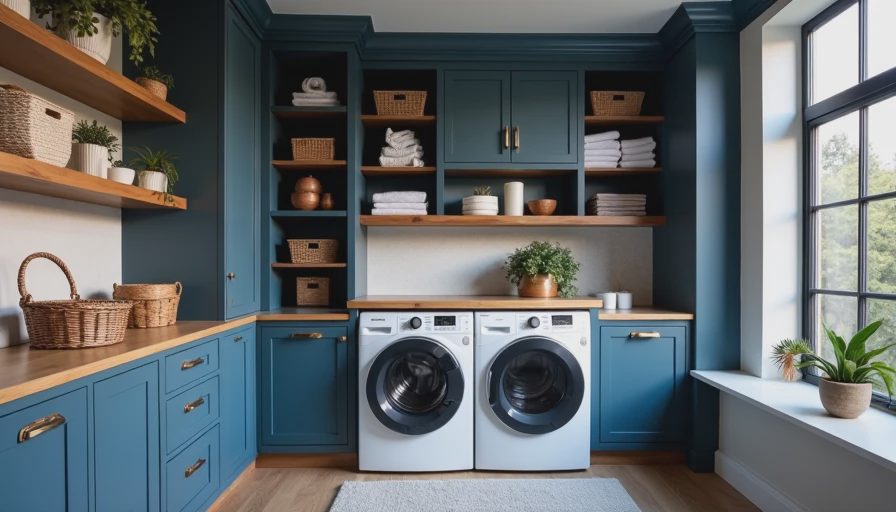
The most useful cabinets for laundry room layouts are often less dramatic than the ones shown in large showroom displays. In a narrow basement room, a 12-inch-deep wall cabinet may be more practical than a 24-inch-deep base run. It can hold detergent, stain remover, spare dryer sheets, and cleaning cloths without stealing walking space.
Measure the room after the appliances are in place, including door swings and the path to the basement stairs. A typical front-loading washer and dryer can need several feet of clear working width, but the exact dimensions depend on the model. Add the depth of water connections, venting, electrical plugs, and trim before committing to a cabinet order.
For a folding surface, a continuous countertop over front-load machines is convenient, but it must not block appliance access or ventilation. Use a removable or carefully supported top if the machines may need replacement. Countertops between $200 and $700 can create a major usability improvement without requiring custom cabinetry throughout the room.
In a closet laundry area, consider one narrow upper cabinet, a shelf above the machines, and a slim pullout for brooms. In a larger basement, base cabinets beside a sink can provide storage and a durable work surface. The best design is the one that leaves enough room to move a wet load, not the one that fills every available inch.
Ventilation and Dryer Safety Are Part of the Design
Dryer safety cannot be treated as an afterthought. The dryer vent should discharge outdoors, use an appropriate smooth metal duct where permitted, and remain as short and direct as the layout allows. Flexible plastic or foil ducting can collect lint and create avoidable fire risk. Clean the lint screen after every load and inspect the vent periodically, especially if drying times increase.
Do not pack cabinets tightly around a gas dryer or cover required air openings. Gas appliances need proper combustion air and safe exhaust. Follow the appliance installation instructions and local code requirements rather than copying a photo from a remodeling site.
Cabinets for laundry room walls should also avoid trapping damp air behind the machines. A small exhaust fan, dehumidifier, or transfer grille can help in a basement, but these tools do not replace a correctly installed dryer vent. If you smell gas, see scorching, or notice unusual heat, stop using the appliance and have the installation inspected.
A moisture meter is useful for checking the wall behind a sink, the floor near the washer, and the cabinet side panels. I use one seasonally in my own Buffalo house. It costs far less than guessing whether a dark mark is old staining or an active leak.

Materials That Make Cleanup Easier
Select finishes based on what happens when detergent splashes, a drain backs up, or a child drops a muddy towel. Painted plywood, laminate, sealed wood, and nonporous countertop materials are generally easier to wipe than raw wood or deeply textured surfaces. The exact product matters less than sealed edges and careful installation.
For lower cabinets, raise sensitive materials away from the floor when possible. A tiled platform, metal legs, or a carefully waterproofed base can provide extra protection, but it must be stable and compatible with the appliance installation. Do not create a raised platform that makes the washer door difficult to reach or conflicts with the drain height.
Use a washable wall surface behind the utility sink and washer. Ceramic tile, quality paint intended for humid areas, or a solid backsplash can protect drywall from routine splashes. Caulk joints where water can collect, then inspect that caulk annually. Small cracks are cheap to fix before moisture reaches the wall cavity.
A Practical Budget Plan
You do not need a full custom remodel to improve storage. A modest setup might include a $150 to $400 wall cabinet, a $100 to $250 shelving unit, a $200 countertop, new braided hoses, and better lighting. A larger built-in project with plywood cabinets, a sink, tile, and electrical work can reach several thousand dollars, especially if plumbing or venting must move.
Spend first on failure prevention. Replace questionable hoses, correct a poor dryer vent, repair a leaking shutoff, and install a dependable light before upgrading hardware. Next, buy storage that keeps chemicals out of reach of children and leaves important connections visible. Decorative doors and expensive handles come after those decisions.
When comparing cabinets for laundry room projects, ask how the boxes handle moisture, whether shelves can be adjusted, and how a damaged panel could be replaced. A less expensive modular cabinet may be the smarter choice if replacement parts are available. Take photographs of plumbing and wiring before installation so future repairs do not become a guessing game.
My Checklist Before Ordering
Measure the full room, appliance openings, door swings, ceiling height, and stair access. Mark shutoff valves, drain lines, outlets, the dryer vent, and any floor drain on a simple sketch. Confirm that the cabinet doors will open without striking an appliance or blocking the exit.
Then choose a moisture-tolerant base, a wipeable countertop, and hardware that will not rust in a damp basement. Keep the washer connections reachable and avoid burying the dryer vent behind permanent construction. If the project involves new circuits, gas work, structural changes, or relocated plumbing, hire the appropriately licensed professional.
Finally, create a maintenance habit. Inspect hoses and cabinet edges every few months, clean the dryer lint path, and look for swelling, musty smells, or unexplained dampness. A room you hate to be in is a room you'll never take care of. Make it bright, accessible, and practical, and you are much more likely to catch the small problem before it becomes a claim.
The right cabinets for laundry room storage should make daily work easier while respecting the hazards behind the walls. Plan around water, heat, ventilation, and access first. Once those are handled, the room can be attractive too—and it will be far better prepared for real family life.