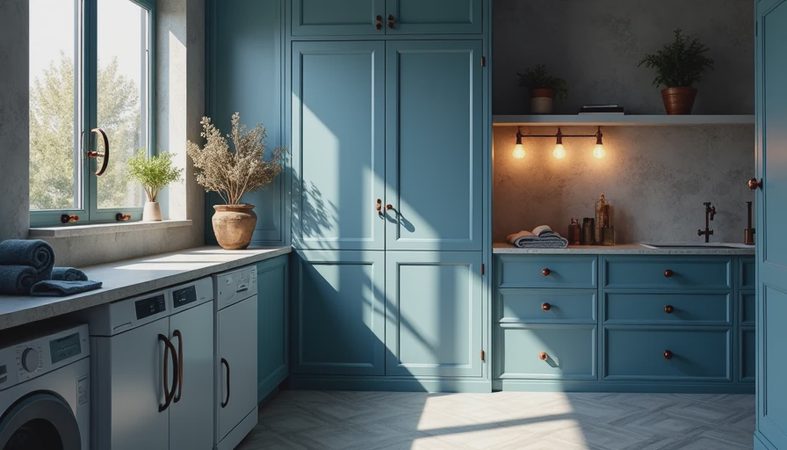
The basement laundry room in our 1947 Buffalo colonial had one bare bulb, a pull chain, and shadows in every corner. That is exactly the kind of space where a leaking supply hose, a frayed cord, or lint gathering behind the dryer can go unnoticed. Choosing laundry room light fixtures is not just a decorating decision. Good lighting helps you spot trouble before it becomes a claim, and the right fixture survives the humidity, vibration, and occasional splash that come with this room.
My rule is simple: make the room bright enough to inspect, not merely bright enough to find a sock. A room you hate to be in is a room you'll never take care of. Better lighting makes cleaning, sorting, and checking connections less unpleasant.
Start with the room's hazards
Before shopping for laundry room light fixtures, look at what can damage them. A basement may have damp concrete, condensation on cold water lines, and a ceiling that is lower than expected. A closet laundry area may have limited airflow and fixtures positioned close to the washer lid or dryer door. In either setting, water and electricity need deliberate separation.
Do not install a fixture directly over an open utility sink or where a burst hose could spray it. Keep switches away from splash zones, and ask a licensed electrician about local clearance and wiring requirements. A damp-rated fixture is designed for locations with moisture, but it is not a license to place electrical equipment where it can be soaked. Wet-rated products are made for more direct exposure and are often unnecessary indoors.
Look above the machines, too. Many laundry rooms have exposed joists, ductwork, or storage shelves. A hanging pendant can become a head-bump hazard, while a hot incandescent bulb near stored paper goods adds an avoidable concern. Low-profile LED fixtures are usually the practical starting point.
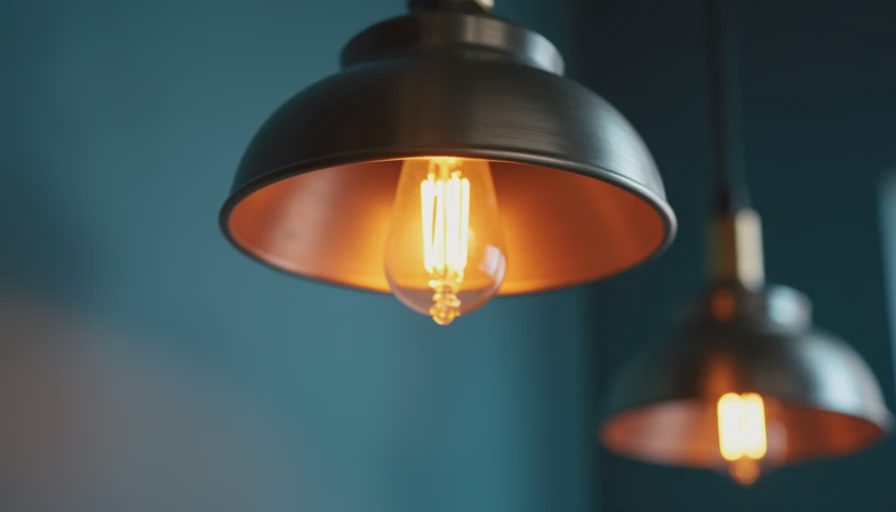
The best fixture types for laundry rooms
Flush-mount LED fixtures provide broad, even light without taking up headroom. For a standard basement with an eight-foot ceiling, a slim 12- to 18-inch round fixture can cover the machines and nearby folding area. Choose a product with a high color rendering index, ideally 80 or higher, so white shirts, detergent residue, and small water stains are easier to distinguish.
Linear LED shop lights work especially well over side-by-side machines. A four-foot fixture can distribute light along the full countertop instead of creating a bright spot in the center and darkness at the edges. Look for a diffused lens, because exposed LED points create glare when you look up while loading a washer.
Recessed lights can look clean, but they require more planning. Use fixtures approved for the ceiling type and insulation conditions, and do not cut into a ceiling without checking for pipes, wiring, or structural framing. In an unfinished basement, surface-mounted linear lights are often easier to service and less disruptive.
Under-cabinet strips are useful over a folding counter, but treat them as task lighting rather than the room's only source. A narrow strip can illuminate a stain or care label while the main ceiling fixture handles general visibility.
Color temperature and brightness matter
Laundry room light fixtures in the 3,500K to 4,000K range usually provide a clean, neutral appearance without the harsh blue cast of very cool bulbs. Warm 2,700K light can feel comfortable, but it can make whites look yellow and hide subtle discoloration. I prefer neutral light in a work area, especially in a room that doubles as a mudroom or pet-washing station.
Brightness depends on the room's size, ceiling height, wall color, and fixture design. Instead of obsessing over a single wattage number, compare lumens. A small closet may need roughly 1,500 to 2,500 total lumens, while a larger basement laundry room may be more comfortable with 3,000 to 5,000 spread across two fixtures. Multiple moderate sources generally work better than one blinding overhead light.
Add a separate switch for the folding counter or sink area. That lets you use targeted light without leaving every fixture on during a quick load transfer. Motion sensors can be convenient when your hands are full, but install one with a timeout long enough to keep the room lit while you sort a basket.
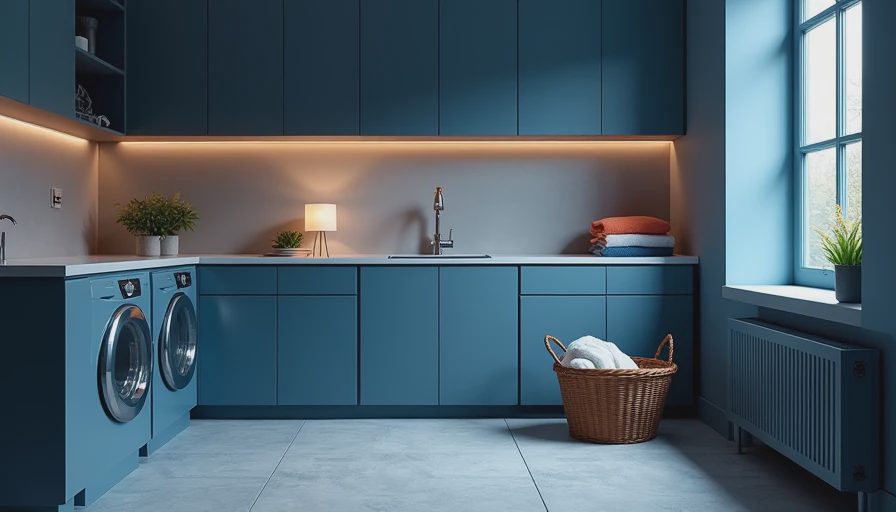
Installation details that prevent future trouble
When replacing an old fixture, turn off the circuit at the breaker and confirm it is dead with a tester. A wall switch is not always enough. If the ceiling box is loose, cracked, or unsupported, fix that before installing a heavier product. Vibration from a nearby dryer can gradually worsen a weak connection.
Use fixtures listed by a recognized testing laboratory, follow the manufacturer's mounting instructions, and avoid burying drivers or connections under insulation unless the product specifically allows it. Do not run extension cords as permanent wiring. If the room lacks a grounded circuit, has aluminum wiring, or shows signs of past overheating, bring in an electrician rather than treating the project as a simple weekend swap.
Keep the dryer vent separate from the lighting plan. A crushed or disconnected vent creates lint and moisture problems regardless of how attractive the ceiling looks. Leave access to clean the fixture and inspect the vent connection. The best laundry room light fixtures are the ones you can maintain without moving a stacked appliance.
What I would buy at different budgets
For a basic upgrade, a $25 to $50 surface-mounted LED can replace a bare bulb and make a small room immediately more usable. At roughly $60 to $150, a quality linear LED or two-fixture setup gives better coverage over machines and counters. A larger renovation may use recessed LEDs, under-cabinet strips, and a dimmer, bringing lighting costs into the $200 to $600 range before labor.
Brands such as Lithonia Lighting, Commercial Electric, and Feit Electric offer widely available options at different price points. Product quality varies by model, so check the listing for color temperature, lumens, damp-location suitability, warranty terms, and replacement availability. A cheap fixture that flickers after a year is not a bargain in a room you use several times a week.
I would spend money on coverage and safe installation before smart features. App controls are pleasant, but they do not help you see a slow leak behind the washer. If you want automation, use it as an addition to dependable physical switches.
A quick inspection before you finish
Stand at the doorway with the lights on and check for dark zones behind the machines, under shelves, and beside the utility sink. Open the washer lid and dryer door. Can you see the seals, hoses, floor, and wall connections clearly? If not, reposition a fixture or add task lighting.
Then inspect for heat discoloration, flickering, loose trim, condensation, and lint accumulation. Test the switch, motion sensor, and any ground-fault protection serving nearby receptacles. Lighting does not replace a properly installed GFCI or regular hose inspection, but it makes those safety checks much easier.
The right laundry room light fixtures will not prevent every plumbing failure or dryer fire. They can help you find the first signs early, keep the room usable, and make routine maintenance less likely to get skipped. Bright, low-profile, moisture-appropriate lighting is a small renovation choice with a very practical payoff.